|
I. Introduction to RCEP
Definition and Significance
The Regional Comprehensive Economic Partnership (RCEP) is a free trade agreement among 15 Asia Pacific countries, namely the 10 member states of the Association of Southeast Asian Nations (ASEAN) (Brunei, Cambodia, Indonesia, Laos, Malaysia, Myanmar, the Philippines, Singapore, Thailand, Vietnam) and five of their major trading partners (Australia, China, Japan, South Korea, and New Zealand). It is a significant milestone in regional economic cooperation.
RCEP represents about 30% of the world's population, GDP, and trade volume. Its establishment is crucial for promoting economic integration in the Asia Pacific region, strengthening regional supply chains, and enhancing the competitiveness of member economies in the global market.
Historical Background
The negotiation process of RCEP started in 201 Over the years, member countries have carried out multiple rounds of negotiations to address various issues such as tariff reduction, rules of origin, trade in services, and intellectual property rights.
The signing of RCEP in November 2020 (effective in January 2022 for most members) was a result of the continuous efforts of all parties to adapt to the changing global economic situation and the need for deeper regional economic cooperation.
II. Advancing Regional Openness
Tariff Reductions
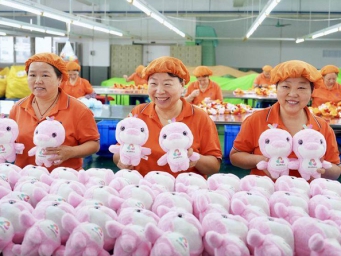
One of the key aspects of RCEP in promoting regional openness is through tariff reductions. Member countries have committed to gradually reducing and eliminating tariffs on a wide range of goods. For example, in the initial years after implementation, a significant number of products in industries such as agriculture, manufacturing, and textiles have seen tariff cuts.
This makes imported goods more affordable for consumers within the member countries. At the same time, it also provides greater market access for exporters. For instance, a Southeast Asian country's textile manufacturers can export their products to other RCEP member countries at a lower tariff rate, which helps to expand their market share and increase production volumes.
Rules of Origin
RCEP has established clear and unified rules of origin. These rules determine whether a product is eligible for preferential treatment under the free trade agreement.
The simplified and harmonized rules of origin make it easier for businesses to prove the origin of their products. For example, a company that sources components from multiple RCEP member countries can more conveniently calculate and prove that its final product meets the origin requirements, enabling it to enjoy tariff free or reduced tariff treatment when exporting within the RCEP area. This promotes the development of regional value chains, as companies are more likely to source components and materials within the region.
Trade Facilitation
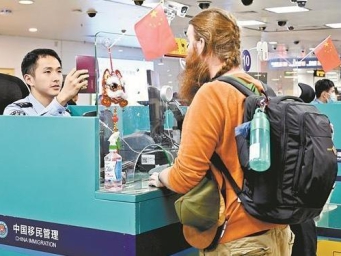
RCEP also focuses on trade facilitation measures. It includes streamlining customs procedures, reducing paperwork, and enhancing the transparency of trade regulations.
For example, the implementation of electronic customs declarations and the pre arrival processing of goods can significantly shorten the time required for goods to clear customs. This not only reduces the cost of trade for businesses but also improves the efficiency of cross border trade, making it more attractive for companies to engage in trade within the RCEP region.
III. Promoting Regional Cooperation
Supply Chain Resilience
In the face of global challenges such as the COVID 19 pandemic and trade disputes, RCEP plays an important role in strengthening regional supply chains. By promoting cooperation among member countries, it helps to diversify supply sources and reduce the risk of supply chain disruptions.
For example, a Japanese electronics company may choose to expand its production network within the RCEP region by collaborating with suppliers in South Korea and Vietnam. This way, if there are disruptions in one part of the supply chain, it can more easily shift production or sourcing to other RCEP member countries, ensuring the continuity of production and supply.
Services Trade and Investment
RCEP also promotes cooperation in the services trade and investment. It liberalizes various service sectors such as finance, telecommunications, and transportation.
In the financial sector, for example, RCEP may allow financial institutions from member countries to expand their business operations more easily in other member countries. This could lead to increased cross border investment in the financial industry, as well as the introduction of more innovative financial services. In the telecommunications field, it may promote the sharing of technology and infrastructure among member countries, improving the overall digital connectivity within the region.
Intellectual Property Rights Protection
RCEP has provisions for the protection of intellectual property rights (IPR). This includes copyrights, trademarks, and patents.
Strengthened IPR protection encourages innovation and technology transfer within the region. For example, a South Korean high tech company may be more willing to license its technology to a Chinese or an ASEAN based company under the assurance of better IPR protection provided by RCEP. This promotes cooperation in research and development, as well as the commercialization of new technologies among member countries.
IV. Challenges and Future Outlook
Implementation Challenges
Despite its many benefits, the implementation of RCEP also faces some challenges. One of the challenges is ensuring that all member countries can effectively implement the agreed upon provisions in a timely manner. Different member countries may have different levels of economic development and regulatory capabilities, which may lead to differences in the speed and quality of implementation.
For example, some developing member countries may need more time and support to upgrade their customs infrastructure to meet the requirements of trade facilitation measures. Additionally, there may be challenges in coordinating domestic policies with the RCEP agreements, especially in sectors such as agriculture, where domestic protectionist interests may be strong in some countries.
Future Expansion and Deepening
Looking ahead, there is potential for the expansion of RCEP. Other Asian and Pacific countries may express interest in joining in the future, which could further expand the scale and influence of the free trade area.
Moreover, member countries can also work towards deepening the cooperation within RCEP. This could involve further liberalizing sectors not fully covered in the initial agreement, strengthening environmental and labor standards cooperation, and promoting more inclusive economic growth within the region. For example, in the future, RCEP could expand its cooperation in the area of green trade, promoting the development and trade of environmental friendly products and services among member countries.
|
|
 |周边二手车|手机版|标签|xml|txt|新闻魔笔科技XinWen.MoBi - 海量语音新闻!
( 粤ICP备2024355322号-1|
|周边二手车|手机版|标签|xml|txt|新闻魔笔科技XinWen.MoBi - 海量语音新闻!
( 粤ICP备2024355322号-1| 粤公网安备44090202001230号 )|网站地图